Art at Saratz
Dear guests, dear friends of art
Art can be found in many places – in museums, studios, and galleries. But when it becomes part of everyday life, when it finds its place in the flow of arrival, stillness, and reflection, it reveals a very special kind of power. At the Saratz in Pontresina, we see ourselves not only as hosts but also as facilitators of cultural exchange – as a house that invites inspiration and makes space for art.
It is truly a matter of the heart for us to give art visibility and life. For many years, we have been welcoming contemporary artists to the Saratz whose works move, challenge, and inspire new ways of seeing. These exhibitions are not meant to simply adorn walls – they are an expression of our conviction that art and culture belong at the core of an open, vibrant house. They are as much a part of the Saratz as the mountains are to the Engadin: ever-present, shaping, poetic.
This current art show continues that tradition while opening fresh perspectives. The works on display explore themes such as the human body, memory, origin, and transformation. They tell stories – sometimes quietly, sometimes powerfully – and invite us to pause, to marvel, and to reflect. Materials become vessels of meaning, forms turn into questions, and surfaces become mirrors.
Here at the Saratz – a place of transition and encounter – art takes on a unique resonance. It meets travelers and locals alike, it moves with you through the corridors, accompanies your thoughts, and creates new moments of connection. It is not fixed, but alive. It transforms the atmosphere – and, perhaps, the way we see the world around us.
We are proud that the Saratz has, over the years, become a home for artistic expression – and that it will continue to be so in the future. Because art needs places where it is not simply explained, but experienced. Places where it is not confined, but open – to questions, to interpretation, to meaningful encounters.
I would like to extend my heartfelt thanks to everyone who made this exhibition possible – to the artists, the curator, our team, and all those who supported this project with dedication and passion.
I warmly invite you to engage with the art at the Saratz with open eyes and an open heart. Let it move you, surprise you, and inspire you. And perhaps you’ll take something with you – a memory, an idea, or simply a feeling.
Warmest regards,
Ulf Naumann
General Manager
Saratz, Pontresina


ART SHOW
Ying Xu & Marieke Prinsloo-Rowe
June 2025 – 05 April 2026
OPENING RECEPTION
Saturday, 19 July 2025 – 9 PM
Curated by Sonja Spleiss. MAS Art Management. ars communication & design
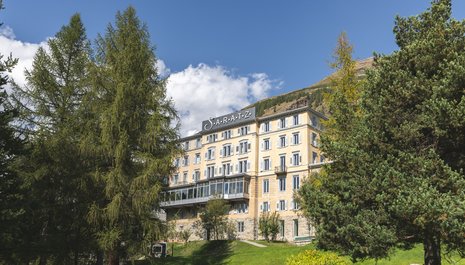
Works by the renowned visual artists Ying Xu and Marieke Prinsloo-Rowe will be on display until April 2026 in the elegant premises of Hotel Saratz in Pontresina.
Ying Xu, born in 1975 in Shanghai and raised in Beijing, now lives and works near Zurich. She received her artistic training at prestigious institutions in China, where she mastered traditional painting techniques. In her early work, she focused mainly on traditional themes. However, over time, her artistic practice expanded to include contemporary issues.
Ying Xu skillfully blends cultural narratives with personal insight, encouraging deeper engagement with themes such as the human body, identity, origin, and the role of art in the contemporary context.
As part of our art exhibition at Hotel Saratz, we are showcasing a selection of her works that invite reflection on complex questions of identity, heritage, and the role of art in today’s world.
Marieke Prinsloo-Rowe was born in 1977 in South Africa. She grew up on a farm in the north of the country and developed an early awareness of sculpture as a catalyst—especially when consciously integrated into the landscape. After completing her Master’s in Sculpture at the Universities of Pretoria and Witwatersrand, she now works in Cape Town and has realized numerous public art installations and exhibitions.
In her work, she combines classical figurative sculpture with South Africa’s post-apartheid cultural diversity. Her sculptures are part of public and private collections worldwide. They bridge tradition and modernity through the human form, using traditional materials such as clay, bronze, and stone.
Prinsloo-Rowe draws on ancient methods of communication to encourage a quiet return to the essential in an increasingly fragmented world. The timeless expression of her work reflects private emotional states and creates a dialogue between the physical and the emotional.